

Sandroplast Roof Coating
Product Images
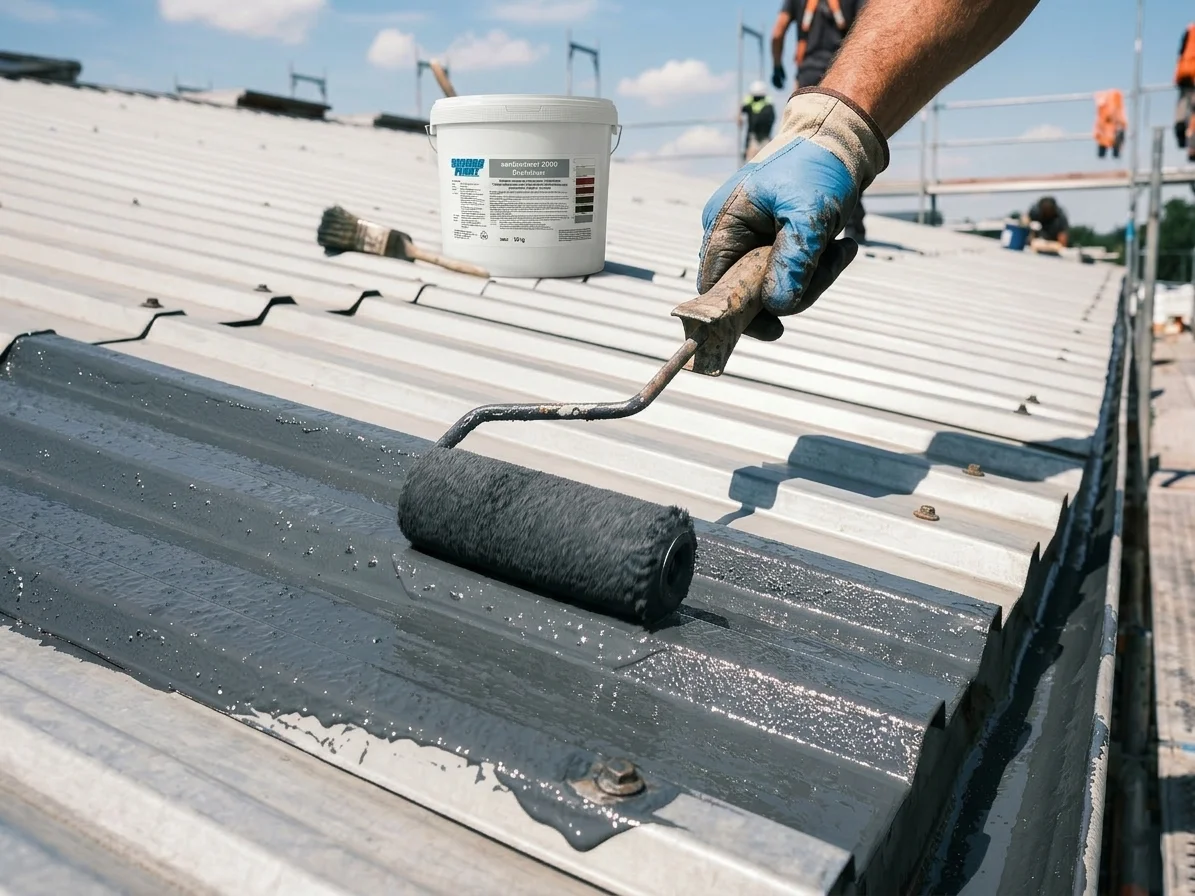
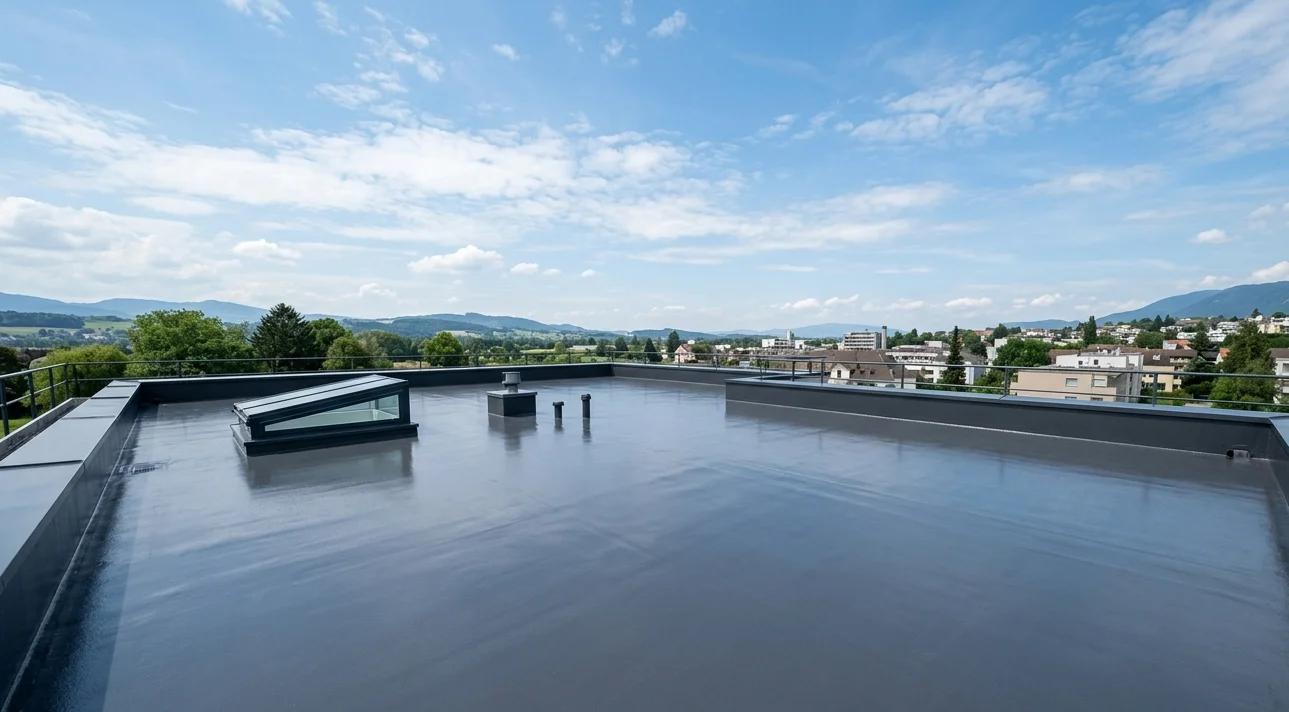
General Quick Information
- Solvent-free, water-based roof coating on acrylic/silicone resin basis
- Elastic, seamless protective layer against weather and UV radiation
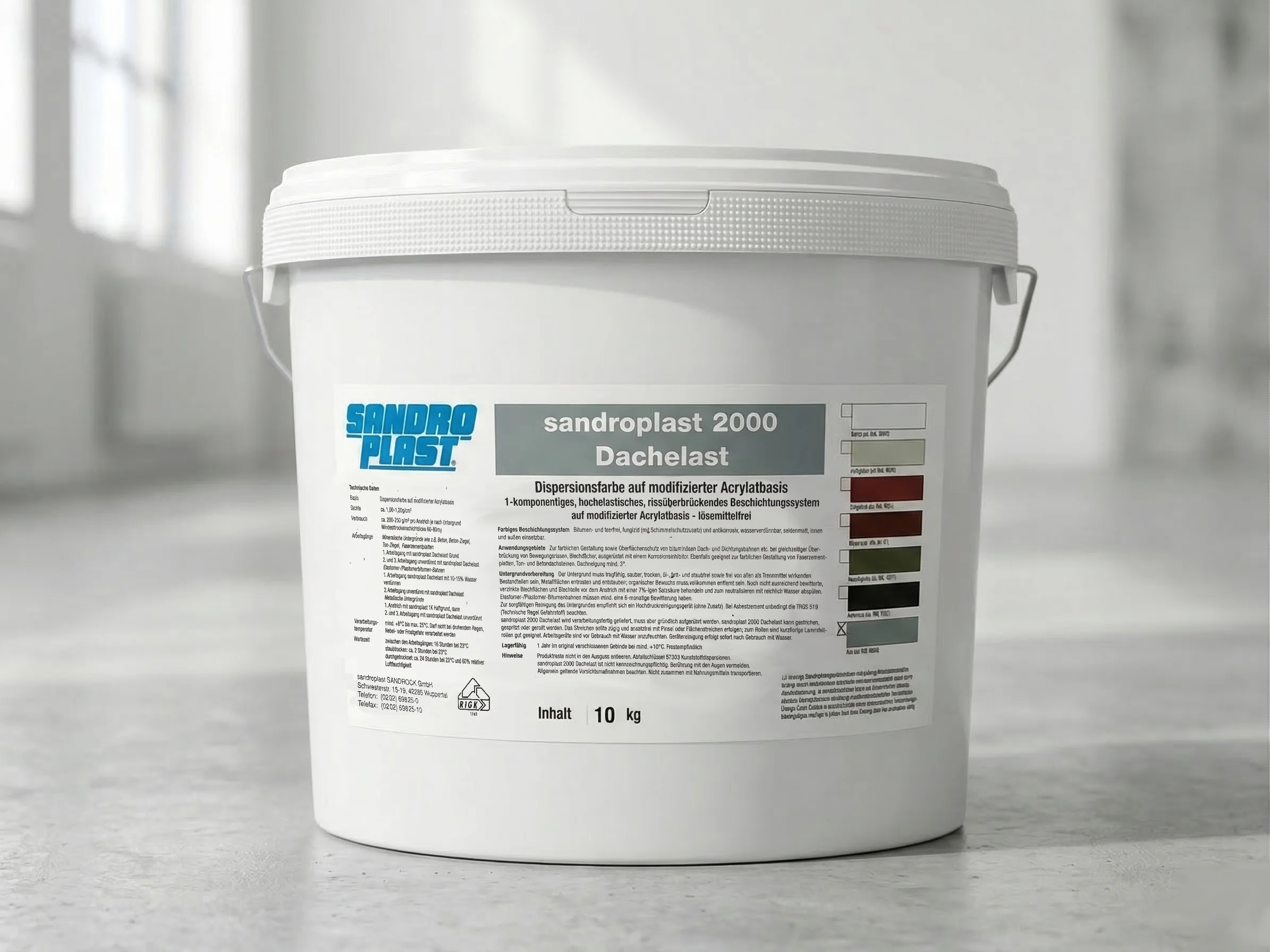
- Available in various RAL colors (red, anthracite, green, aluminum, white, gray, brown)
- Not classified as hazardous according to CLP regulation
- Low water hazard (WGK 1) - environmentally friendly
Product Type
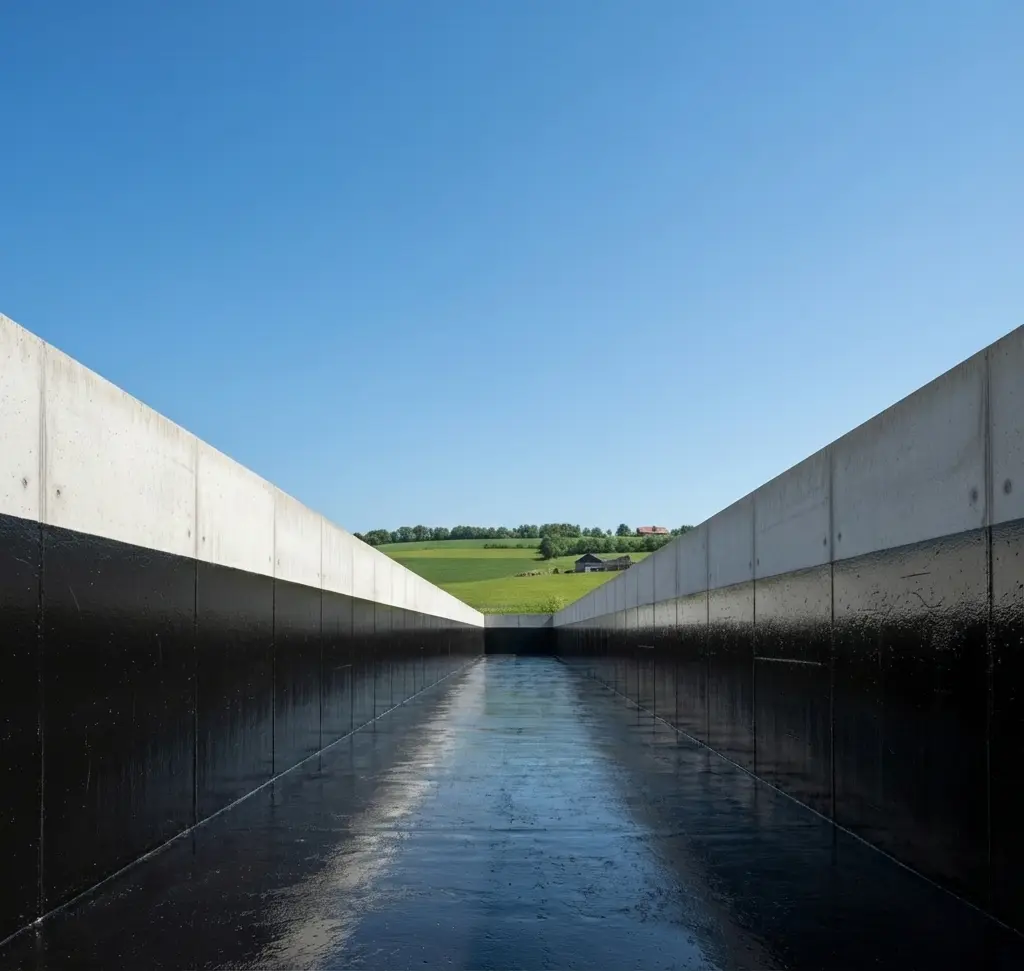
The sandroplast Roof Coating is a high-quality, water-dilutable coating material based on acrylic and silicone resin dispersion with metallic pigments. After drying, it forms an elastic, seamless protective layer that protects the roof from weather, UV radiation and standing water.
Application Area
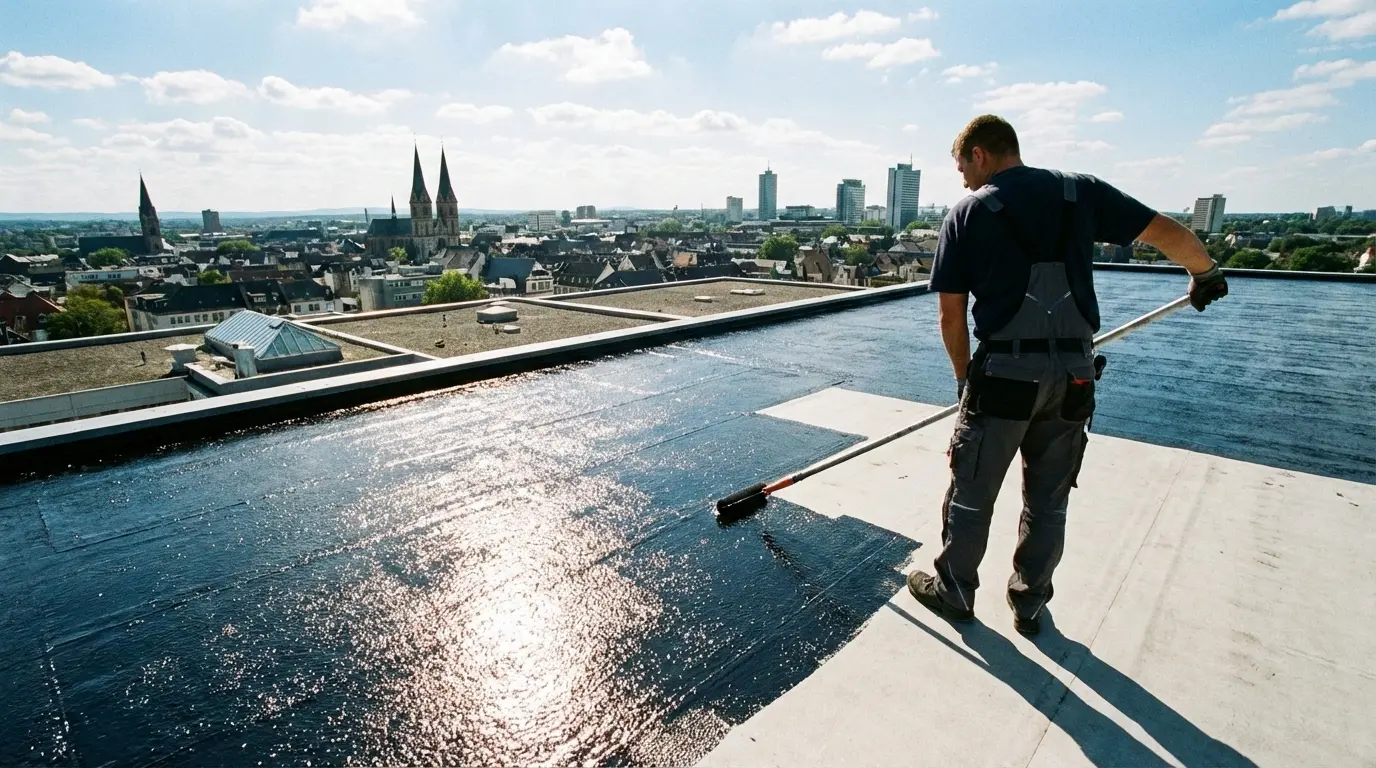
The sandroplast Roof Coating is ideal for coloring and surface protection of bituminous roof and waterproofing membranes while simultaneously bridging movement cracks. The product is also suitable for metal roofs and is equipped with a corrosion inhibitor.
Furthermore, the roof coating can be used for coloring fiber cement panels, clay and concrete roof tiles. The minimum roof pitch is 3°. The solvent-free, nearly odorless coating can be processed without problems in both private and commercial applications.
Properties
The Roof Coating is characterized by its solvent-free, water-based formulation on acrylic/silicone resin basis. It is liquid, easy to process and fully miscible with water. Tool cleaning is done simply with water.
The product is not classified as a hazardous substance and is not subject to labeling requirements under the CLP regulation. The density at 20°C is approximately 1.11 g/cm³ with good processing viscosity for rolling and brushing.
The Roof Coating is a 1-component, highly elastic, crack-bridging coating system. It is bitumen and tar-free, fungicidal (with mold protection additive) and anti-corrosive. The satin-matt coating can be used both indoors and outdoors. The classification as low water hazard (WGK 1) also makes it environmentally safe to handle.
Substrate
The substrate must be load-bearing, clean, dry, free of oil, grease and dust, and free of all components acting as release agents. Metal surfaces must be derusted and dusted. Organic growth must be completely removed.
Galvanized sheet metal surfaces and parts that have not been sufficiently weathered must be treated with 7% hydrochloric acid before coating and rinsed with plenty of water to neutralize. Elastomer/plastomer bitumen membranes must have at least 6 months of weathering.
A high-pressure cleaning device (without additives) is recommended for thorough cleaning of the substrate. For asbestos cement, TRGS 519 (Technical Rule for Hazardous Substances) must be observed.
Processing
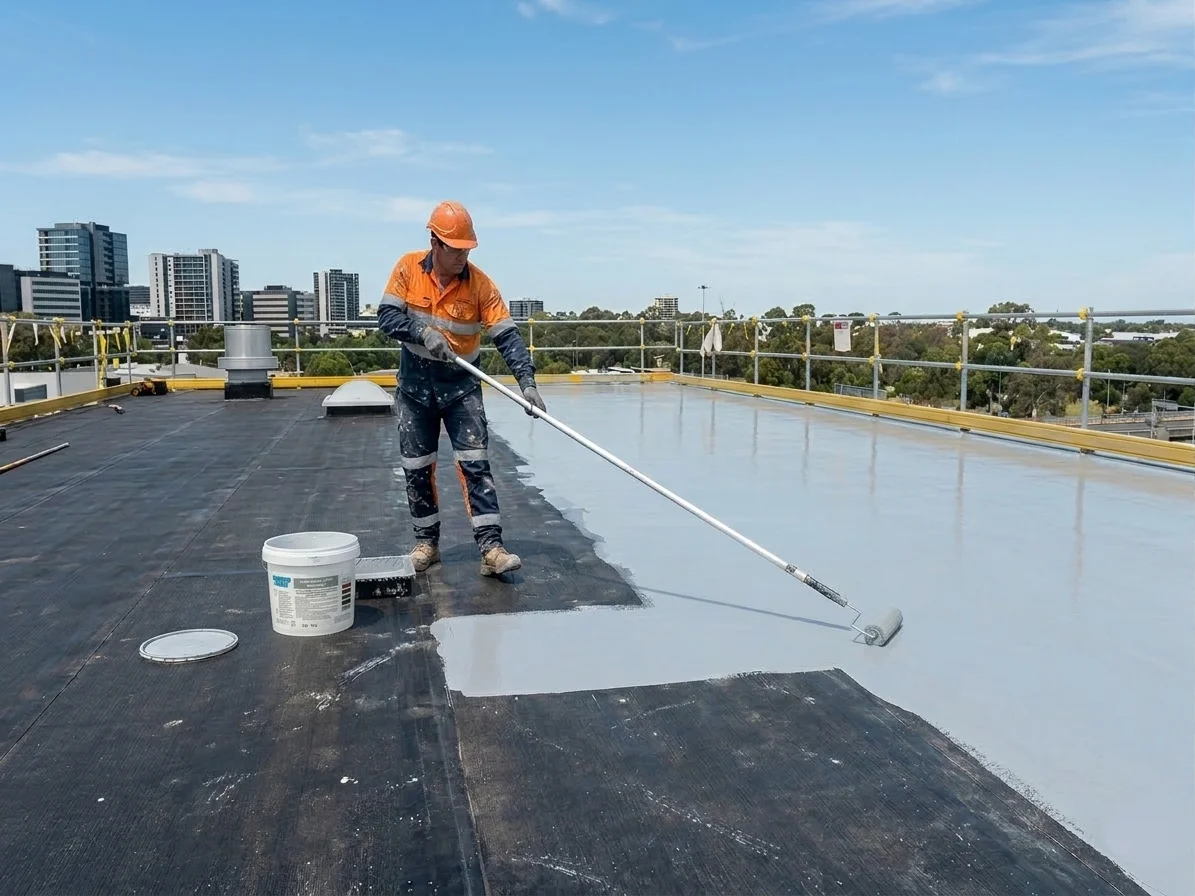
The roof coating is applied to clean, load-bearing and dry substrates. Before application, the substrate must be freed from dust, loose particles and release agents. sandroplast Roof Coating is supplied ready for use but must be thoroughly stirred.
Processing is carried out depending on the object with roller, brush or suitable spray equipment in one to two work steps. Brushing should be done quickly and seamlessly with brush or surface brush. Short-pile lambskin rollers are well suited for rolling. Tools should be moistened with water before use.
For mineral substrates such as concrete, concrete tiles, clay tiles or fiber cement panels: 1st coat with sandroplast Roof Coating Primer, 2nd and 3rd coat undiluted with sandroplast Roof Coating. For elastomer/plastomer bitumen membranes: 1st coat diluted with 10-15% water, 2nd coat undiluted. For metallic substrates: 1st coat with sandroplast 1K Adhesion Primer, then 2nd and 3rd coat undiluted.
Frequently Asked Questions
Material Consumption
Approx. 200-250 g/m² per coat, depending on substrate. Minimum dry film thickness 60-80 µm.
Container Sizes
Additional delivery sizes upon request
Storage Conditions
Shelf life of 1 year in original sealed container at minimum +10°C. The product is frost-sensitive. Do not empty product residues into drains. Waste code 57303 plastic dispersions. Avoid contact with eyes. Do not transport together with food.
Questions about this product?
Our experts are happy to advise you on application and product selection.
Request Consultation Now